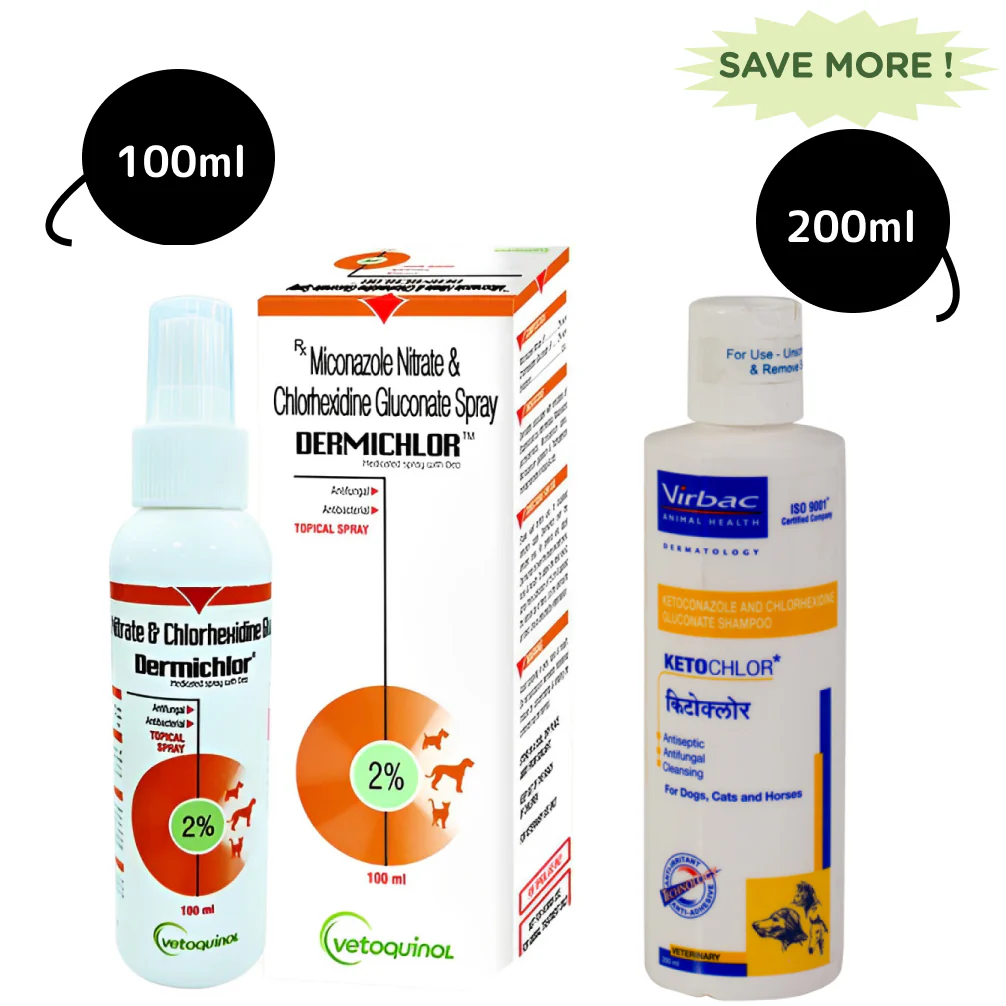
Vetoquinol Dermichlor Antibacterial Antifungal Spray (100ml) for Dogs and Cats
Vetoquinol Dermichlor Antibacterial Antifungal Spray For Dogs & Cats
Vetoquinol Dermichlor Spray is a powerful antibacterial and antifungal spray specially formulated to treat skin infections and irritations in dogs and cats. This trusted Vetoquinol product helps combat bacterial and fungal pathogens, promoting faster healing of wounds, hotspots, and other skin conditions. Its easy spray application ensures targeted treatment, reduces itching and inflammation, and supports your pet’s overall skin health. Ideal for managing infections caused by bacteria and fungi, Vetoquinol Dermichlor keeps your furry friend comfortable and infection-free.
Class: Dermatological / Topical Antimicrobial
Composition: Chlorhexidine Gluconate 2.0% w/v, Miconazole Nitrate 2.0% w/v
Why Does Your Pet Need Vetoquinol Dermichlor Spray?
-
Provides rapid relief from itching and irritation caused by bacterial overgrowth or environmental allergens.
-
Functions as a highly effective antifungal spray for dogs and cats to eliminate ringworm and yeast infections.
-
Acts as a broad-spectrum cat and dog antibacterial spray to prevent secondary infections in minor cuts and abrasions.
-
The non-greasy formula of Vetoquinol Dermichlor spray ensures a mess-free application that does not stain furniture or fur.
-
Supports the skin's natural healing process by creating an unfavorable environment for harmful microbes to thrive.
Directions for Use:
Start by identifying the affected area on your pet’s skin. For best results with this antifungal spray for dogs and cats, gently clip any excess hair around the lesion to ensure the solution reaches the skin directly. Shake the bottle well before use. Hold the Vetoquinol Dermichlor spray bottle approximately six inches away from the skin and spray until the area is thoroughly wet. This cat and dog antibacterial spray should be used twice daily or as directed by your veterinarian. Ensure your pet does not lick the area for at least ten minutes until the solution has dried completely.
Storage:
Store in a cool, dry place away from direct sunlight. Keep the container tightly closed when not in use. Ensure the product is kept out of reach of children and animals to prevent accidental ingestion.
At a Glance:
|
Product Type |
Topical Spray |
|
Actives |
Chlorhexidine & Miconazole |
|
Parasites/Pathogens Covered |
Bacteria, Yeast, & Fungi |
|
Eligibility |
Dogs and Cats |
|
Usage |
External Only |
|
Frequency |
Twice Daily |
|
Safety Notes |
Avoid eyes and mouth |
Bonus: Enhance Your Pet's Wellness
-
Shop our Pet Pharmacy for specialized skin supplements and medicated shampoos.
-
Explore our Dog Grooming and Cat Clothing categories.
Also Read: Fungal Infections in Dogs: Know What You Might Be Missing
Disclaimer: The information contained on Supertails is of a general nature and is not intended to address the specific circumstances of any particular individual or entity. Although we endeavor to provide accurate and timely information, there can be no guarantee that such information is accurate as of the date it is received or that it will continue to be accurate in the future. No one should act upon such information without appropriate professional advice after a thorough examination of the particular situation.
FAQs
Can I spray antifungal spray on my dog?
Yes, you can safely apply an antifungal spray to your dog’s skin if they are suffering from fungal or yeast infections. It is important to choose a product specifically formulated for canine use, like this one, to ensure the pH balance and active ingredients are safe and effective for their sensitive skin barrier.
Can I use antifungal spray on my cat?
You can use an antifungal spray on your cat, provided the product is labeled for feline use. Cats are sensitive to certain chemicals, so using a veterinary-approved formula is crucial. Always monitor your cat after application to ensure they do not lick the spray off before it has fully dried and absorbed into the skin.
How do I tell if my cat or dog has a fungal infection?
Common signs of a fungal infection include circular patches of hair loss, red or crusty skin, and persistent itching. You may also notice a distinct musty odor or thickened, darkened skin in the affected areas. If your pet displays these symptoms, consult a veterinarian for a formal diagnosis and an appropriate topical treatment plan.
Original: $2.57
-70%$2.57
$0.77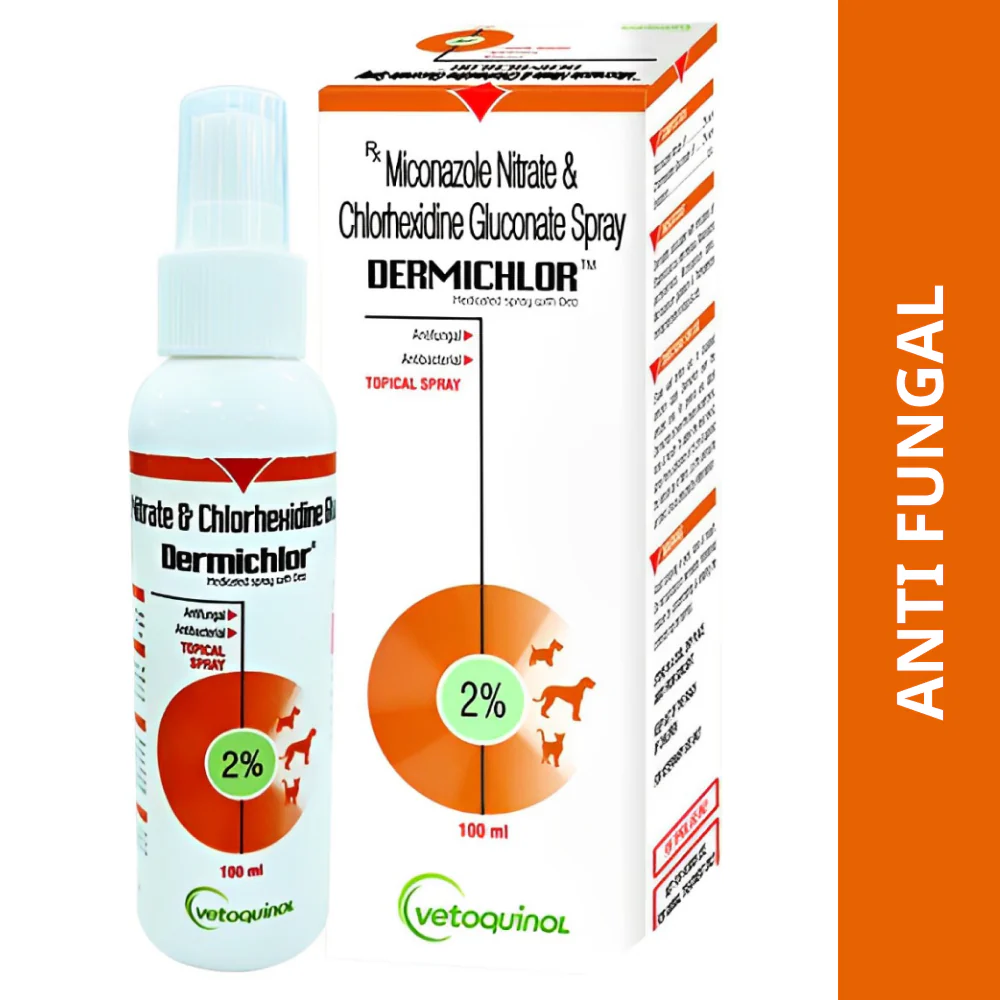
Description
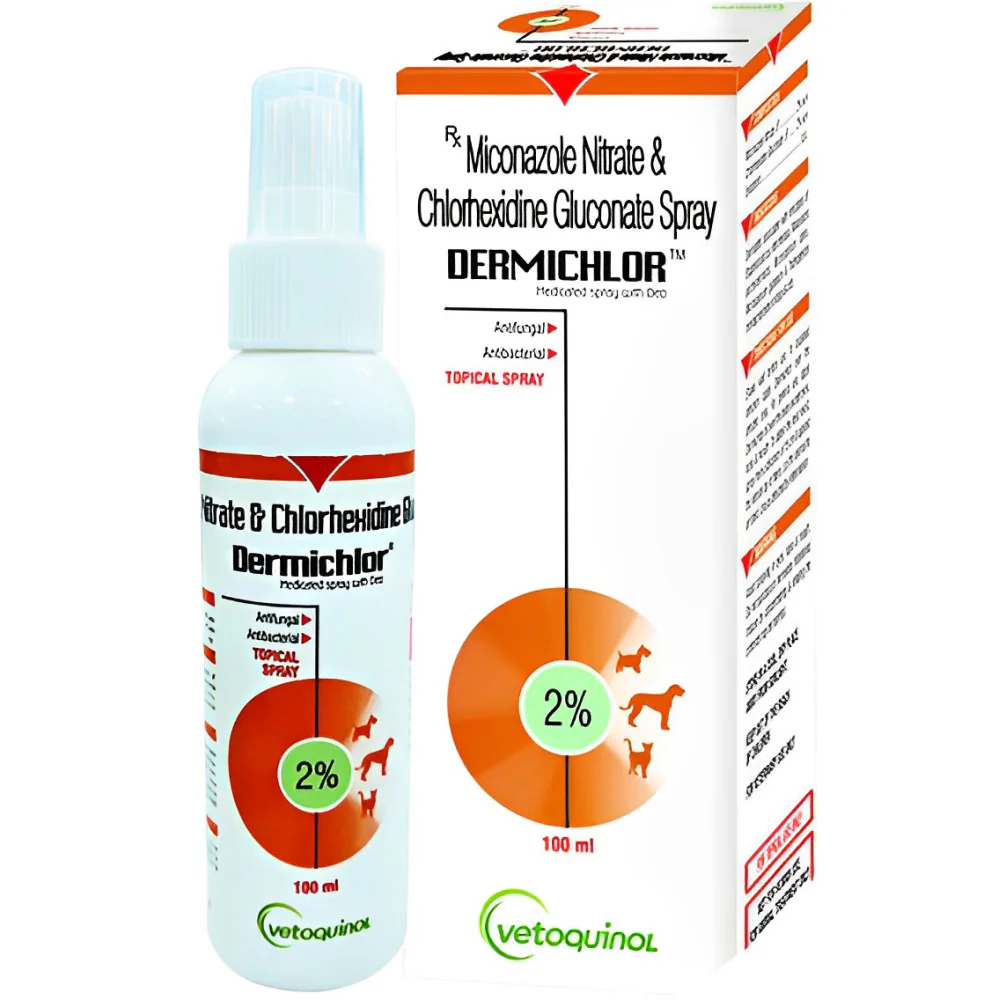
Vetoquinol Dermichlor Antibacterial Antifungal Spray For Dogs & Cats
Vetoquinol Dermichlor Spray is a powerful antibacterial and antifungal spray specially formulated to treat skin infections and irritations in dogs and cats. This trusted Vetoquinol product helps combat bacterial and fungal pathogens, promoting faster healing of wounds, hotspots, and other skin conditions. Its easy spray application ensures targeted treatment, reduces itching and inflammation, and supports your pet’s overall skin health. Ideal for managing infections caused by bacteria and fungi, Vetoquinol Dermichlor keeps your furry friend comfortable and infection-free.
Class: Dermatological / Topical Antimicrobial
Composition: Chlorhexidine Gluconate 2.0% w/v, Miconazole Nitrate 2.0% w/v
Why Does Your Pet Need Vetoquinol Dermichlor Spray?
-
Provides rapid relief from itching and irritation caused by bacterial overgrowth or environmental allergens.
-
Functions as a highly effective antifungal spray for dogs and cats to eliminate ringworm and yeast infections.
-
Acts as a broad-spectrum cat and dog antibacterial spray to prevent secondary infections in minor cuts and abrasions.
-
The non-greasy formula of Vetoquinol Dermichlor spray ensures a mess-free application that does not stain furniture or fur.
-
Supports the skin's natural healing process by creating an unfavorable environment for harmful microbes to thrive.
Directions for Use:
Start by identifying the affected area on your pet’s skin. For best results with this antifungal spray for dogs and cats, gently clip any excess hair around the lesion to ensure the solution reaches the skin directly. Shake the bottle well before use. Hold the Vetoquinol Dermichlor spray bottle approximately six inches away from the skin and spray until the area is thoroughly wet. This cat and dog antibacterial spray should be used twice daily or as directed by your veterinarian. Ensure your pet does not lick the area for at least ten minutes until the solution has dried completely.
Storage:
Store in a cool, dry place away from direct sunlight. Keep the container tightly closed when not in use. Ensure the product is kept out of reach of children and animals to prevent accidental ingestion.
At a Glance:
|
Product Type |
Topical Spray |
|
Actives |
Chlorhexidine & Miconazole |
|
Parasites/Pathogens Covered |
Bacteria, Yeast, & Fungi |
|
Eligibility |
Dogs and Cats |
|
Usage |
External Only |
|
Frequency |
Twice Daily |
|
Safety Notes |
Avoid eyes and mouth |
Bonus: Enhance Your Pet's Wellness
-
Shop our Pet Pharmacy for specialized skin supplements and medicated shampoos.
-
Explore our Dog Grooming and Cat Clothing categories.
Also Read: Fungal Infections in Dogs: Know What You Might Be Missing
Disclaimer: The information contained on Supertails is of a general nature and is not intended to address the specific circumstances of any particular individual or entity. Although we endeavor to provide accurate and timely information, there can be no guarantee that such information is accurate as of the date it is received or that it will continue to be accurate in the future. No one should act upon such information without appropriate professional advice after a thorough examination of the particular situation.
FAQs
Can I spray antifungal spray on my dog?
Yes, you can safely apply an antifungal spray to your dog’s skin if they are suffering from fungal or yeast infections. It is important to choose a product specifically formulated for canine use, like this one, to ensure the pH balance and active ingredients are safe and effective for their sensitive skin barrier.
Can I use antifungal spray on my cat?
You can use an antifungal spray on your cat, provided the product is labeled for feline use. Cats are sensitive to certain chemicals, so using a veterinary-approved formula is crucial. Always monitor your cat after application to ensure they do not lick the spray off before it has fully dried and absorbed into the skin.
How do I tell if my cat or dog has a fungal infection?
Common signs of a fungal infection include circular patches of hair loss, red or crusty skin, and persistent itching. You may also notice a distinct musty odor or thickened, darkened skin in the affected areas. If your pet displays these symptoms, consult a veterinarian for a formal diagnosis and an appropriate topical treatment plan.