Ruffwear Front Range Harness for Dogs (Blue Pool)
Ruffwear Front Range Everyday Dog Harness (Blue Pool)
The harness your dog wears every single day needs to do a lot. It needs to be comfortable enough for a slow morning walk and secure enough for an overexcited sprint to the park. It needs to fit properly, come on and off without a wrestling match, and last long enough to justify what you paid for it.
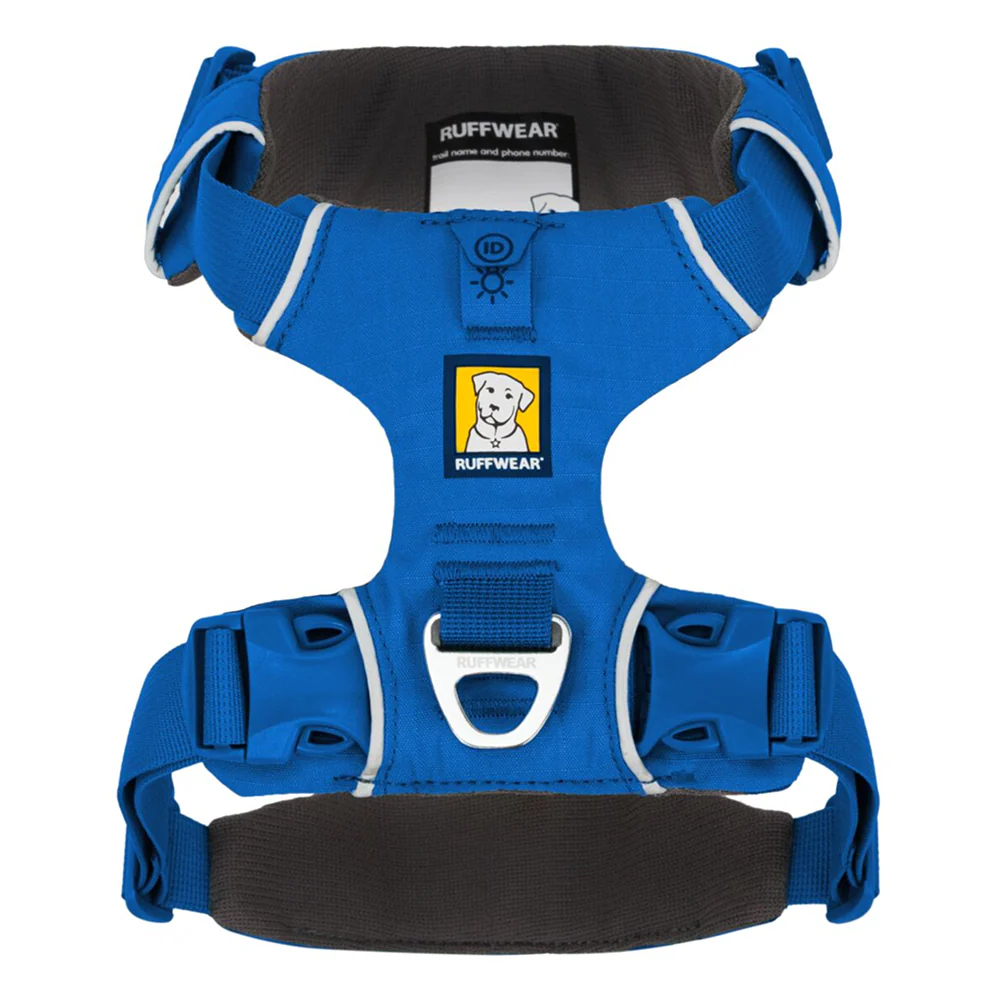
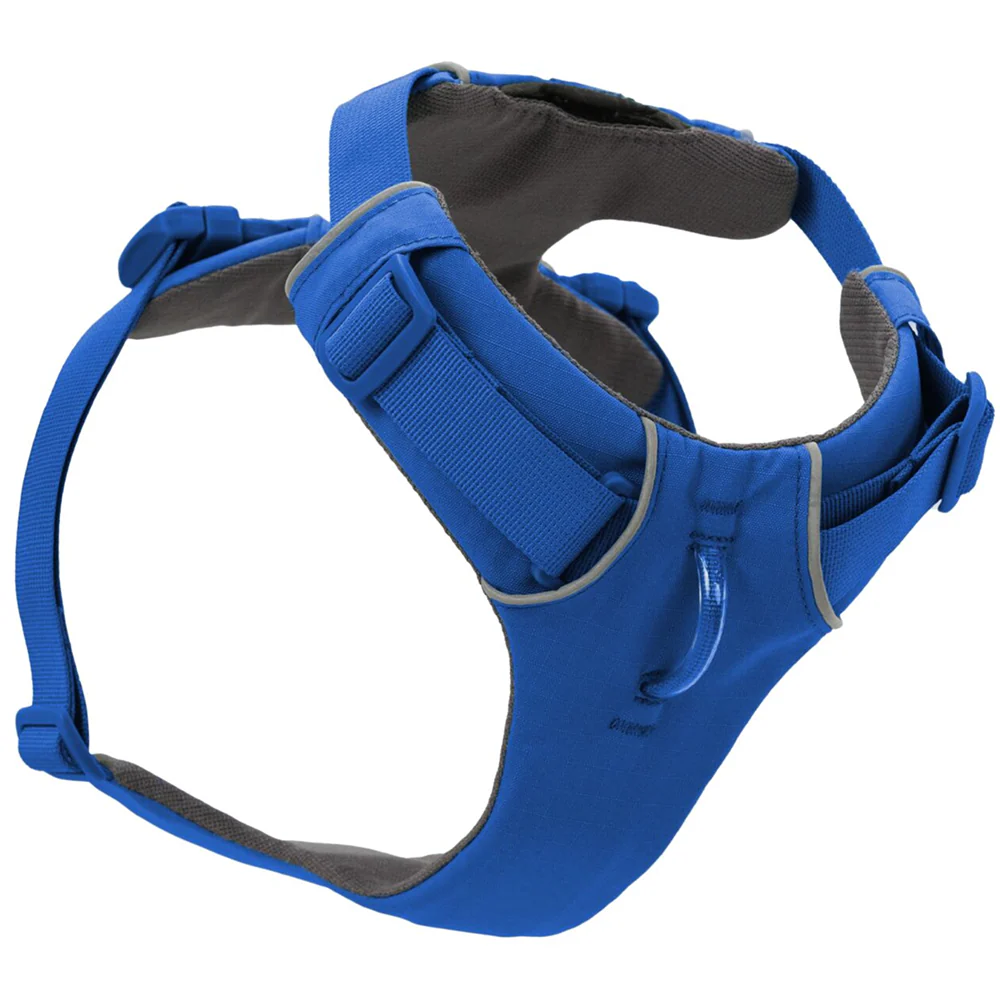
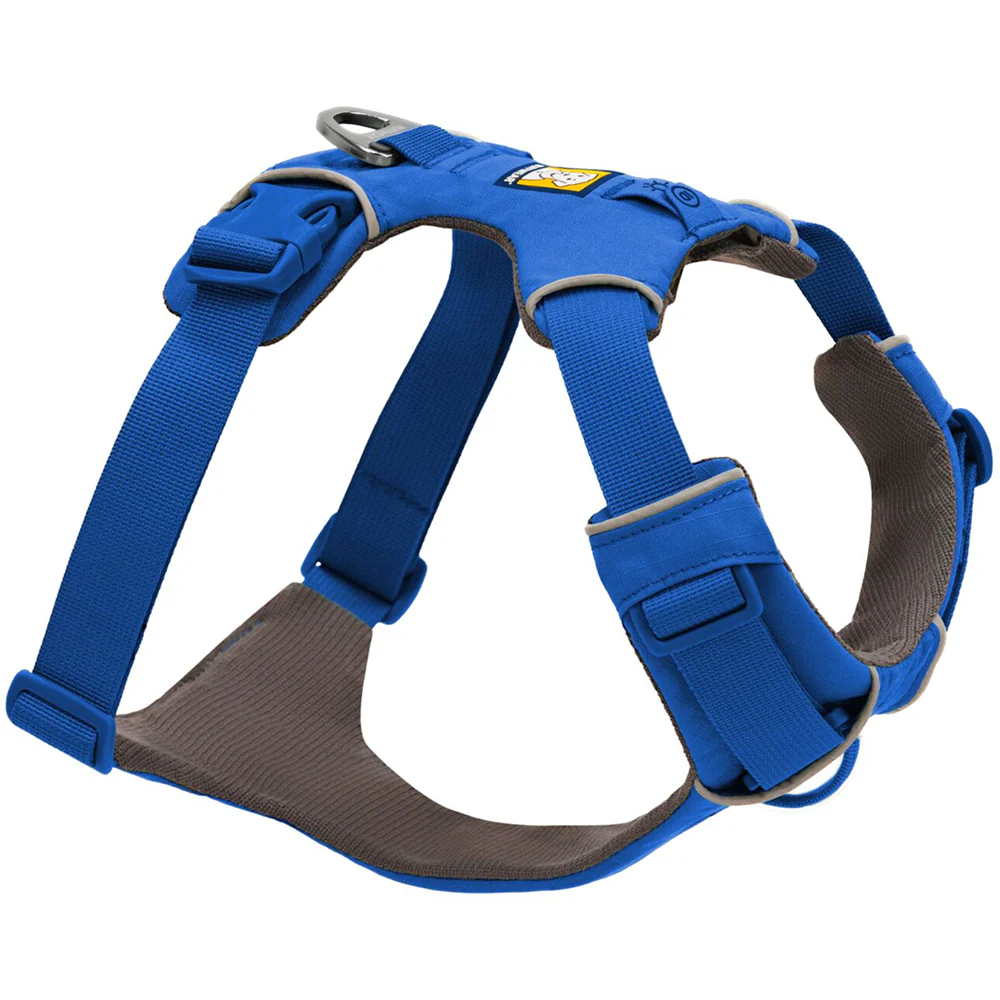
The Ruffwear Front Range harness was built for exactly this — the everyday. Two leash attachment points, a front chest clip for training and a back aluminium V-ring for regular walks. Four points of adjustment so it fits your dog's actual shape, not a generic average. Closed-cell foam padding on the chest and belly panels to prevent rubbing and chafing on longer outings. Reflective trim for visibility in low light. A light attachment loop for the Ruffwear Beacon. And a small zippered ID pocket on the harness itself so your dog's tags are always where they should be — on them.
(Available in Blue Pool and multiple other colours. Sizes from XS to XL. Made with recycled materials. Imported by GNV Commodities Private Limited, Chennai.)
What Makes the Ruffwear Front Range Harness Worth It?
Here is what sets the Front Range apart from standard dog harnesses:
-
Dual leash attachment points — a reinforced front chest clip for training and redirecting pullers, and an aluminium V-ring on the back for everyday walks. Most harnesses give you one or the other. Front Range gives you both, so you are never reaching for a different harness depending on the day
-
Four points of adjustment — two on the chest and two on the neck, allowing a precise fit across the full range of your dog's chest girth. This matters more than it sounds — a harness that sits incorrectly redistributes pressure onto the wrong areas and can cause discomfort on longer walks
-
Closed-cell foam padding — the chest and belly panels are padded with closed-cell foam, the same material used in performance outdoor gear. It prevents chafing without absorbing water and adding weight — important for dogs that love puddles, streams, or rainy day walks
-
Reflective trim — low-light visibility built into the harness itself, not a clip-on accessory that gets left behind
-
Light attachment loop — a dedicated loop for the Ruffwear Beacon light, so your dog is visible from every angle on early morning or late evening walks
-
ID pocket — a small zippered pocket on the harness for an ID card or extra tag. A practical detail that most harness brands overlook entirely
-
Recycled materials — the shell, webbing, and lining are made with recycled content, for dog parents who care about what their gear is made from
How Do You Measure Your Dog for the Right Front Range Size?
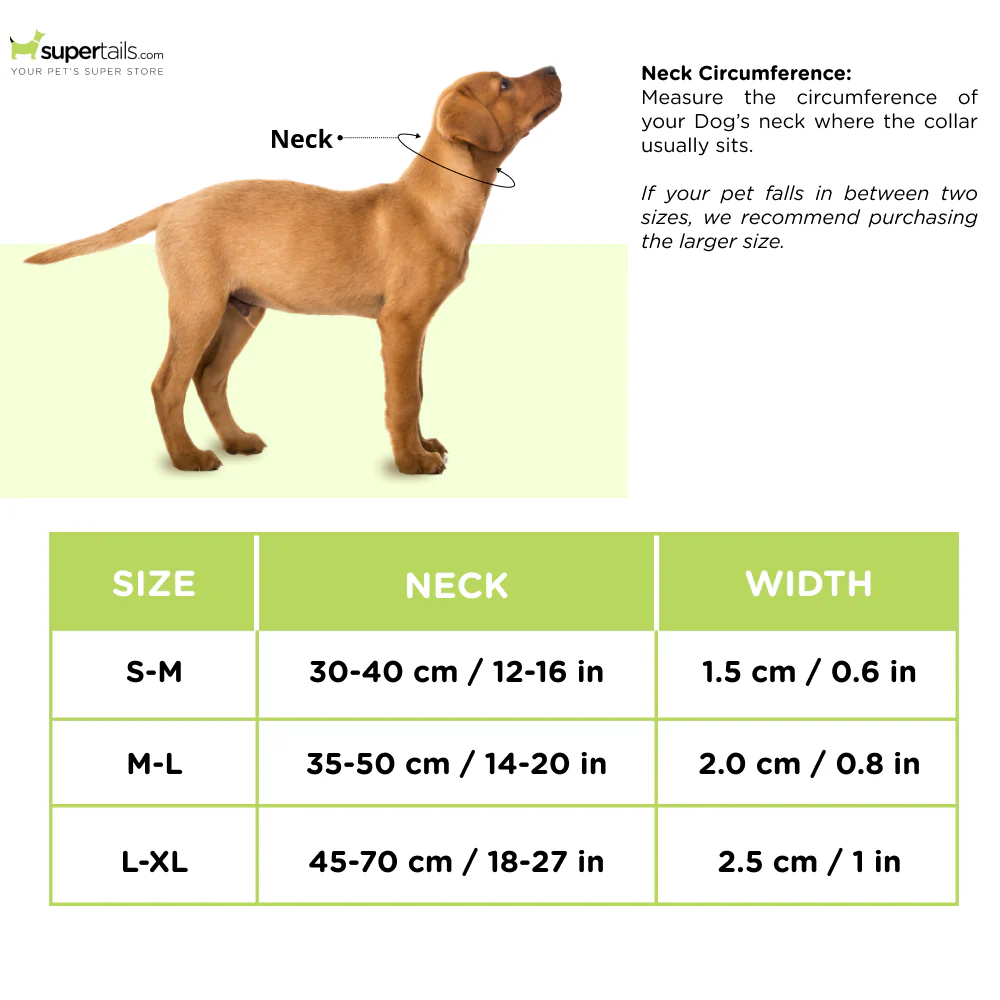
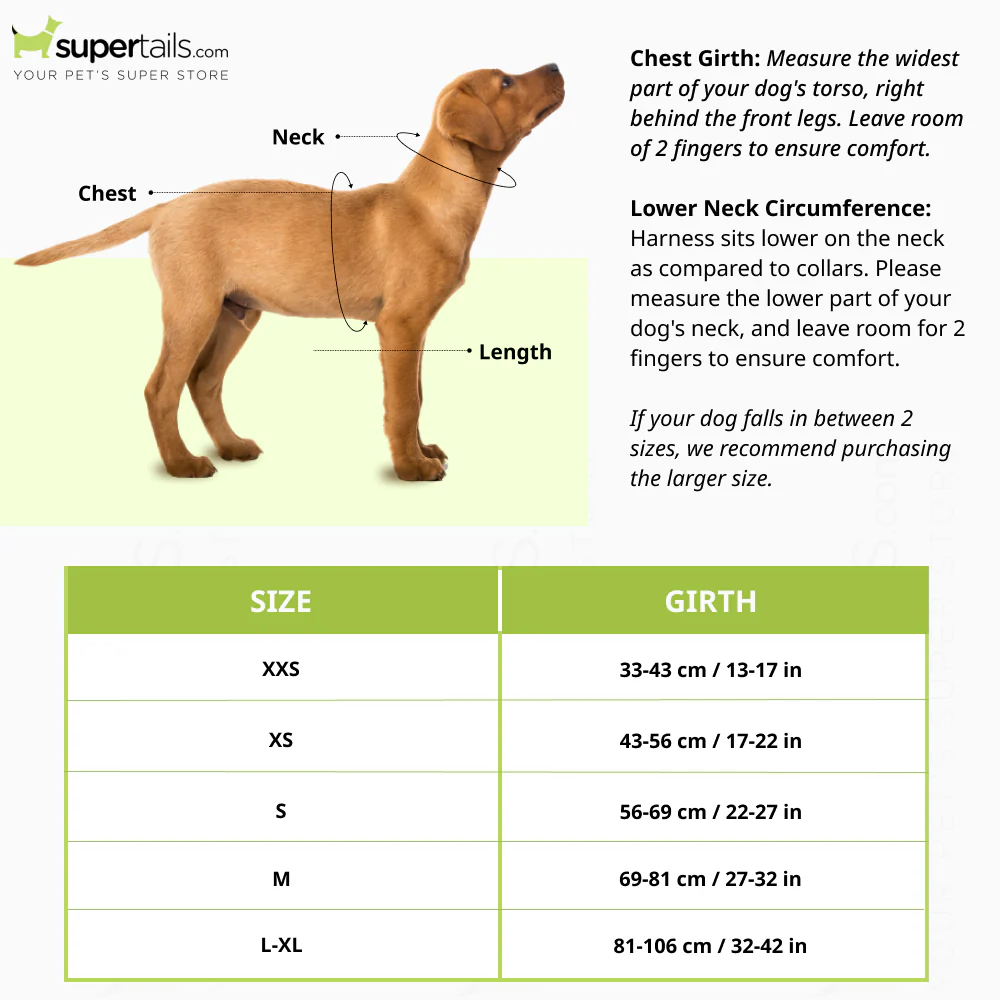
The Front Range is sized by your dog's chest girth — the widest part of their ribcage, just behind the front legs. Use a soft tape measure and add 2 to 3cm to allow for comfortable movement.
|
Size |
Chest Girth |
|
XS |
33 to 43cm |
|
S |
43 to 56cm |
|
M |
56 to 69cm |
|
L |
69 to 81cm |
|
XL |
81 to 107cm |
When in doubt between two sizes, size up — you can always tighten the adjustment points, but you cannot let out a harness that is already at its largest setting. If your dog's girth measurement falls at the top end of a size, go to the next size up.
Common breed size guides (approximate — always measure your individual dog):
|
Breed |
Typical Size |
|
Chihuahua, Toy Poodle |
XS |
|
Beagle, Cocker Spaniel, Shih Tzu |
S to M |
|
Labrador Retriever, Golden Retriever |
L |
|
German Shepherd |
L to XL |
|
Rottweiler, Great Dane |
XL |
Learn more about picking the right harness or collar for your dog by reading our expert-approved blog: Dog Harness vs. Collar for Dogs
How Do You Put On and Adjust the Front Range Harness?
-
Loosen all four adjustment points before the first fitting
-
Slip the harness over your dog's head so the chest panel sits flat against their chest
-
Bring the belly strap under your dog's belly and clip the side-release buckle
-
Adjust the neck loop first — you should be able to fit two fingers between the harness and your dog's neck
-
Adjust the belly strap — same rule, two fingers of clearance
-
Check the chest panel is centred and sitting flat, not twisted or riding up into the armpits
-
Attach your leash to the back V-ring for regular walks, or to the front chest clip for training sessions
Once adjusted to your dog's measurements, the Front Range clips on and off via the single side-release buckle — no readjustment needed for daily use.
What Is the Difference Between the Front Clip and the Back Clip?
-
Front chest clip — attaches to a reinforced loop on the chest panel. When your dog pulls forward, the leash redirects them back towards you rather than allowing them to pull straight ahead. Useful for training loose-leash walking, managing reactive dogs, or giving you more control in busy or unpredictable environments. Not designed for sustained running or high-speed activity with the leash clipped here
-
Back aluminium V-ring — sits between the shoulder blades on the back panel. This is the everyday walking attachment point — comfortable, gives your dog natural freedom of movement, and handles sustained activity well. The aluminium V-ring is robust enough for dogs that pull hard without distorting under load
Most owners use the front clip during training phases and transition to the back clip once their dog's leash manners are established — or switch between them walk by walk depending on where they are going.
How Do You Wash the Front Range Harness?
-
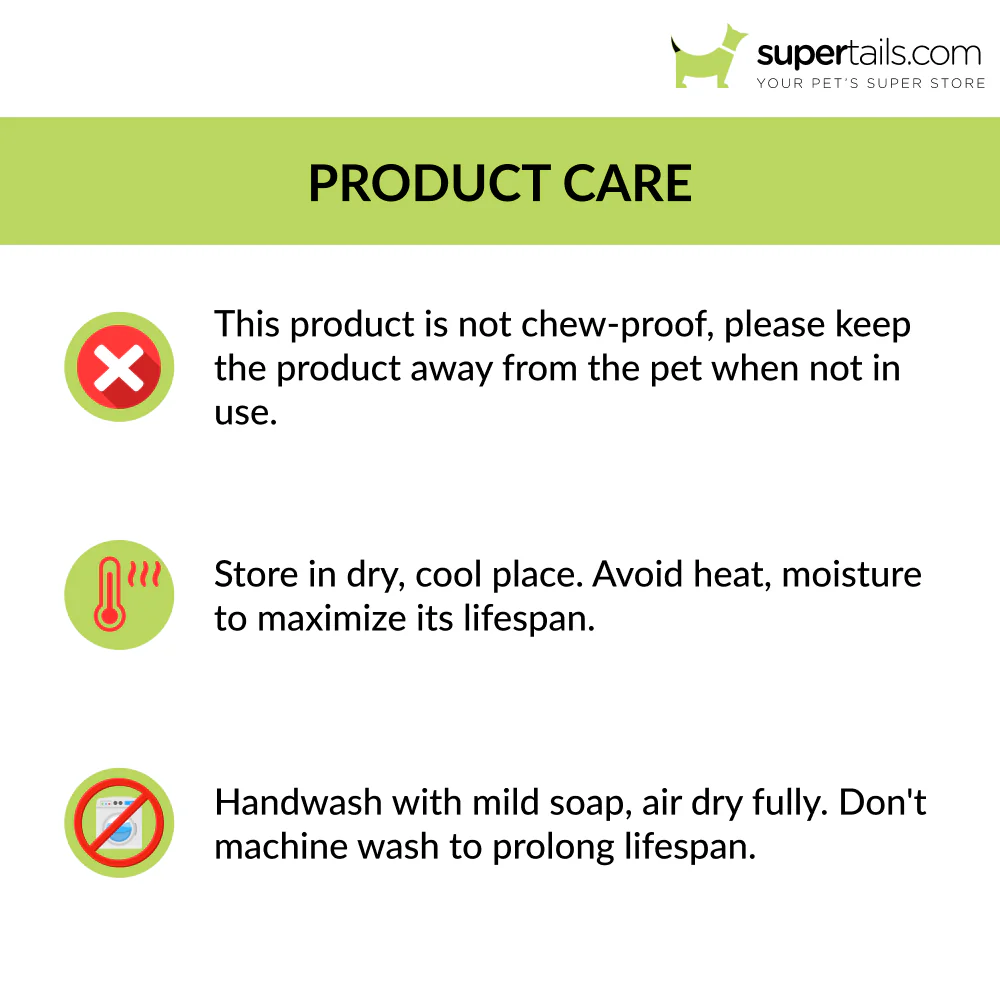
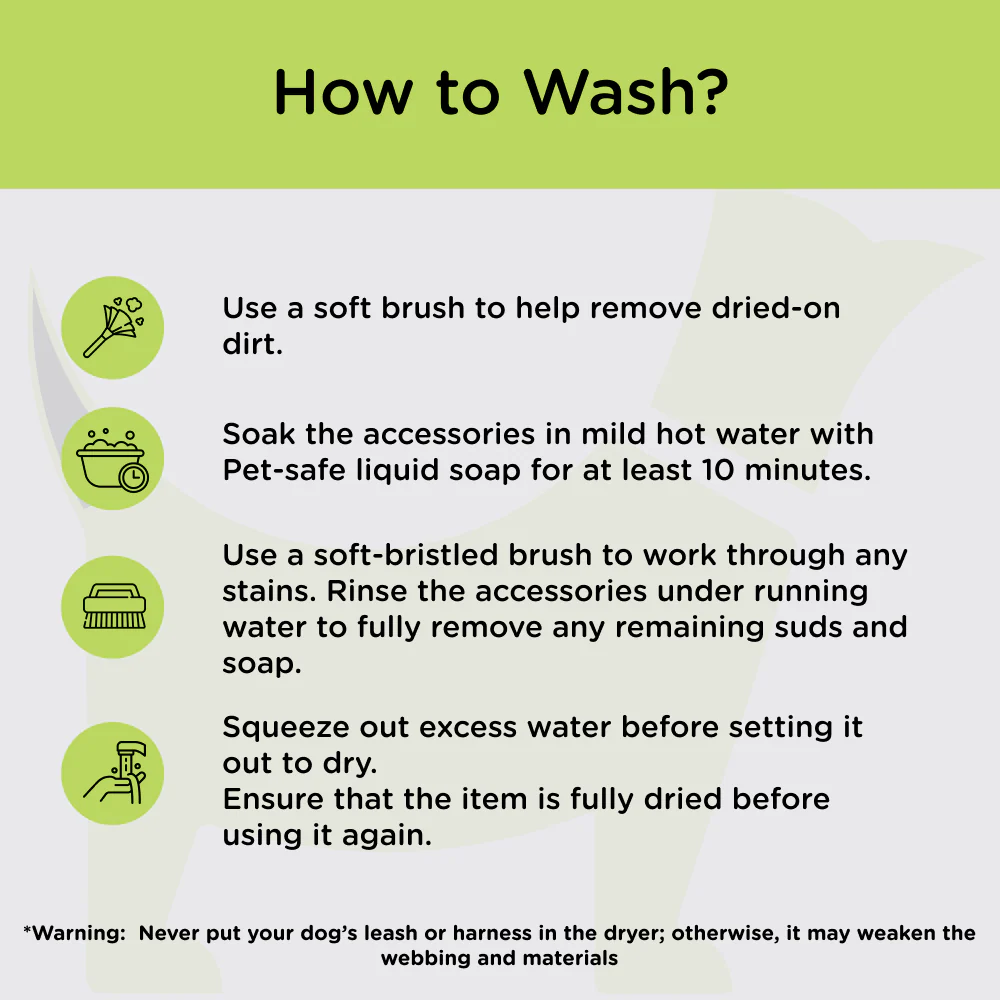
Hand wash in cold water with mild soap, or machine wash on a gentle cycle in a mesh laundry bag
-
Do not use bleach or fabric softener
-
Air dry — do not tumble dry or expose to direct heat
-
Check all buckles, clips, and stitching after washing and before each use
-
The foam padding retains its shape through regular washing without compressing
Vet Also Recommends
-
Explore our complete collection of Dog Harnesses
-
Explore our complete collection of Dog Collars
-
Explore our complete collection of Dog Leashes
Get the harness that earns its place on your dog every single day — buy the Ruffwear Front Range harness online on Supertails. 100% authentic, imported directly from Ruffwear. Available in Blue Pool and other colours across all sizes from XS to XL. Check the Front Range price and read reviews from verified buyers on the product page. Same-day delivery available in select cities. Shop Now.
FAQs
What are the features of the Ruffwear Front Range harness?
The Front Range has dual leash attachment points — a front chest clip for training and an aluminium V-ring on the back for everyday walks. It features closed-cell foam padding on the chest and belly panels, four points of adjustment for a precise fit, reflective trim for low-light visibility, a Ruffwear Beacon light loop, and a zippered ID pocket. Made with recycled materials in the shell, webbing, and lining.
How do I measure my dog for the correct Ruffwear Front Range harness size?
Measure the widest part of your dog's chest girth — just behind the front legs — using a soft tape measure. XS fits 33 to 43cm, S fits 43 to 56cm, M fits 56 to 69cm, L fits 69 to 81cm, and XL fits 81 to 107cm. If your measurement falls between sizes or at the top of a size range, go up — the four adjustment points give you plenty of room to tighten for a secure fit.
What is the difference between the front clip and back clip on the Front Range harness?
The front chest clip redirects your dog towards you when they pull forward, making it useful for training loose-leash walking and managing pullers. The back aluminium V-ring is the everyday walking attachment — it gives your dog natural freedom of movement and handles sustained activity well. Most owners use both depending on the situation, which is why having both on a single harness makes the Front Range so practical.
How do I put on and adjust the Ruffwear Front Range harness?
Slip the harness over your dog's head, bring the belly strap underneath and clip the side-release buckle, then adjust all four points until you can fit two fingers between the harness and your dog's body at every contact point. Once set to your dog's measurements, you only need to clip and unclip the single buckle for daily use — no readjustment needed each time.
What is the difference between the Ruffwear Front Range and the Hi and Light harness?
The Front Range is Ruffwear's everyday padded harness — built for daily walks, training, and general use, with foam padding, dual clips, an ID pocket, and a light loop. The Hi and Light is Ruffwear's minimalist running and trail harness — lighter, lower profile, and designed for active dogs where weight and freedom of movement are the priority over padding and features. If your dog needs one harness for everything, the Front Range is the more versatile choice.
Description
Ruffwear Front Range Everyday Dog Harness (Blue Pool)
The harness your dog wears every single day needs to do a lot. It needs to be comfortable enough for a slow morning walk and secure enough for an overexcited sprint to the park. It needs to fit properly, come on and off without a wrestling match, and last long enough to justify what you paid for it.
The Ruffwear Front Range harness was built for exactly this — the everyday. Two leash attachment points, a front chest clip for training and a back aluminium V-ring for regular walks. Four points of adjustment so it fits your dog's actual shape, not a generic average. Closed-cell foam padding on the chest and belly panels to prevent rubbing and chafing on longer outings. Reflective trim for visibility in low light. A light attachment loop for the Ruffwear Beacon. And a small zippered ID pocket on the harness itself so your dog's tags are always where they should be — on them.
(Available in Blue Pool and multiple other colours. Sizes from XS to XL. Made with recycled materials. Imported by GNV Commodities Private Limited, Chennai.)
What Makes the Ruffwear Front Range Harness Worth It?
Here is what sets the Front Range apart from standard dog harnesses:
-
Dual leash attachment points — a reinforced front chest clip for training and redirecting pullers, and an aluminium V-ring on the back for everyday walks. Most harnesses give you one or the other. Front Range gives you both, so you are never reaching for a different harness depending on the day
-
Four points of adjustment — two on the chest and two on the neck, allowing a precise fit across the full range of your dog's chest girth. This matters more than it sounds — a harness that sits incorrectly redistributes pressure onto the wrong areas and can cause discomfort on longer walks
-
Closed-cell foam padding — the chest and belly panels are padded with closed-cell foam, the same material used in performance outdoor gear. It prevents chafing without absorbing water and adding weight — important for dogs that love puddles, streams, or rainy day walks
-
Reflective trim — low-light visibility built into the harness itself, not a clip-on accessory that gets left behind
-
Light attachment loop — a dedicated loop for the Ruffwear Beacon light, so your dog is visible from every angle on early morning or late evening walks
-
ID pocket — a small zippered pocket on the harness for an ID card or extra tag. A practical detail that most harness brands overlook entirely
-
Recycled materials — the shell, webbing, and lining are made with recycled content, for dog parents who care about what their gear is made from
How Do You Measure Your Dog for the Right Front Range Size?
The Front Range is sized by your dog's chest girth — the widest part of their ribcage, just behind the front legs. Use a soft tape measure and add 2 to 3cm to allow for comfortable movement.
|
Size |
Chest Girth |
|
XS |
33 to 43cm |
|
S |
43 to 56cm |
|
M |
56 to 69cm |
|
L |
69 to 81cm |
|
XL |
81 to 107cm |
When in doubt between two sizes, size up — you can always tighten the adjustment points, but you cannot let out a harness that is already at its largest setting. If your dog's girth measurement falls at the top end of a size, go to the next size up.
Common breed size guides (approximate — always measure your individual dog):
|
Breed |
Typical Size |
|
Chihuahua, Toy Poodle |
XS |
|
Beagle, Cocker Spaniel, Shih Tzu |
S to M |
|
Labrador Retriever, Golden Retriever |
L |
|
German Shepherd |
L to XL |
|
Rottweiler, Great Dane |
XL |
Learn more about picking the right harness or collar for your dog by reading our expert-approved blog: Dog Harness vs. Collar for Dogs
How Do You Put On and Adjust the Front Range Harness?
-
Loosen all four adjustment points before the first fitting
-
Slip the harness over your dog's head so the chest panel sits flat against their chest
-
Bring the belly strap under your dog's belly and clip the side-release buckle
-
Adjust the neck loop first — you should be able to fit two fingers between the harness and your dog's neck
-
Adjust the belly strap — same rule, two fingers of clearance
-
Check the chest panel is centred and sitting flat, not twisted or riding up into the armpits
-
Attach your leash to the back V-ring for regular walks, or to the front chest clip for training sessions
Once adjusted to your dog's measurements, the Front Range clips on and off via the single side-release buckle — no readjustment needed for daily use.
What Is the Difference Between the Front Clip and the Back Clip?
-
Front chest clip — attaches to a reinforced loop on the chest panel. When your dog pulls forward, the leash redirects them back towards you rather than allowing them to pull straight ahead. Useful for training loose-leash walking, managing reactive dogs, or giving you more control in busy or unpredictable environments. Not designed for sustained running or high-speed activity with the leash clipped here
-
Back aluminium V-ring — sits between the shoulder blades on the back panel. This is the everyday walking attachment point — comfortable, gives your dog natural freedom of movement, and handles sustained activity well. The aluminium V-ring is robust enough for dogs that pull hard without distorting under load
Most owners use the front clip during training phases and transition to the back clip once their dog's leash manners are established — or switch between them walk by walk depending on where they are going.
How Do You Wash the Front Range Harness?
-
Hand wash in cold water with mild soap, or machine wash on a gentle cycle in a mesh laundry bag
-
Do not use bleach or fabric softener
-
Air dry — do not tumble dry or expose to direct heat
-
Check all buckles, clips, and stitching after washing and before each use
-
The foam padding retains its shape through regular washing without compressing
Vet Also Recommends
-
Explore our complete collection of Dog Harnesses
-
Explore our complete collection of Dog Collars
-
Explore our complete collection of Dog Leashes
Get the harness that earns its place on your dog every single day — buy the Ruffwear Front Range harness online on Supertails. 100% authentic, imported directly from Ruffwear. Available in Blue Pool and other colours across all sizes from XS to XL. Check the Front Range price and read reviews from verified buyers on the product page. Same-day delivery available in select cities. Shop Now.
FAQs
What are the features of the Ruffwear Front Range harness?
The Front Range has dual leash attachment points — a front chest clip for training and an aluminium V-ring on the back for everyday walks. It features closed-cell foam padding on the chest and belly panels, four points of adjustment for a precise fit, reflective trim for low-light visibility, a Ruffwear Beacon light loop, and a zippered ID pocket. Made with recycled materials in the shell, webbing, and lining.
How do I measure my dog for the correct Ruffwear Front Range harness size?
Measure the widest part of your dog's chest girth — just behind the front legs — using a soft tape measure. XS fits 33 to 43cm, S fits 43 to 56cm, M fits 56 to 69cm, L fits 69 to 81cm, and XL fits 81 to 107cm. If your measurement falls between sizes or at the top of a size range, go up — the four adjustment points give you plenty of room to tighten for a secure fit.
What is the difference between the front clip and back clip on the Front Range harness?
The front chest clip redirects your dog towards you when they pull forward, making it useful for training loose-leash walking and managing pullers. The back aluminium V-ring is the everyday walking attachment — it gives your dog natural freedom of movement and handles sustained activity well. Most owners use both depending on the situation, which is why having both on a single harness makes the Front Range so practical.
How do I put on and adjust the Ruffwear Front Range harness?
Slip the harness over your dog's head, bring the belly strap underneath and clip the side-release buckle, then adjust all four points until you can fit two fingers between the harness and your dog's body at every contact point. Once set to your dog's measurements, you only need to clip and unclip the single buckle for daily use — no readjustment needed each time.
What is the difference between the Ruffwear Front Range and the Hi and Light harness?
The Front Range is Ruffwear's everyday padded harness — built for daily walks, training, and general use, with foam padding, dual clips, an ID pocket, and a light loop. The Hi and Light is Ruffwear's minimalist running and trail harness — lighter, lower profile, and designed for active dogs where weight and freedom of movement are the priority over padding and features. If your dog needs one harness for everything, the Front Range is the more versatile choice.