Medfly Healthcare Defender Nex Dewormer Tablets for Cats
Medfly Healthcare Defender Nex Dewormer Tablets for Cats
Cats are experts at hiding discomfort — and worm infections are no exception. Whether you have an indoor Persian curled up on your sofa in Mumbai, a curious Indian Shorthair exploring every corner in Bengaluru, or a kitten you've recently brought home, intestinal worms are a far more common threat than most cat parents in India realise. Medfly Healthcare Defender Nex is a vet-approved, broad-spectrum deworming tablet formulated specifically for cats, using a dual-active combination of Praziquantel and Pyrantel Pamoate to target tapeworms, hookworms, and roundworms in a single, stress-free dose. No fasting needed, no complicated routine — just reliable protection every three months.
What Makes Defender Nex the Right Choice for Your Cat?
- A Formula Built for Feline Biology: Defender Nex isn't a dog dewormer reformulated for cats — it's designed from the ground up for feline physiology. Each tablet contains Praziquantel IP 20 mg and Pyrantel Pamoate IP 230 mg, a dosage ratio calibrated for cats, not dogs. Praziquantel disrupts the tapeworm's outer membrane, causing it to detach and be expelled. Pyrantel Pamoate paralyses roundworms and hookworms, allowing your cat's system to clear them naturally. Together, they cover the three worm types most commonly found in Indian cats (per veterinary consensus), with no overlap, no gaps.
- Scored Tablets for Precise Weight-Based Dosing: Every cat is different. That's why Defender Nex tablets are scored — marked to split cleanly into halves — so you can dose accurately by your cat's weight without guesswork. A petite kitten gets half a tablet; a larger adult cat gets one and a half. No mortar-and-pestle crushing, no messy liquids.
- No Fasting. No Fuss: You don't need to withhold food before or after giving Defender Nex. Simply place the tablet directly in your cat's mouth, or hide it in a small amount of wet food, a piece of chicken, or a treat. Most cats take it without resistance. The tablet's neutral profile means it doesn't trigger the food refusal that some stronger-smelling dewormers do.
Dosage & How to Give It?
By Body Weight
|
Cat Weight |
Dose |
|
Up to 2 kg |
½ tablet |
|
2.1–4 kg |
1 tablet |
|
Over 4 kg |
1½ tablets |
Give the tablet directly or disguise it in food. Do not withhold food before or after treatment.
How Often Should You Deworm Your Cat?
- For adult cats, deworm every three months as a standard schedule. Cats that hunt — even indoor cats in Indian homes who catch geckos, insects, or mice — are at higher risk of tapeworm infection and may need monthly treatment (per veterinary guidance). Outdoor cats in cities like Delhi, Chennai, or Kolkata, where exposure to other strays is possible, benefit from staying strictly on the quarterly schedule.
- Kittens: Treat at 6, 8, 10, and 12 weeks of age, then monthly until 6 months old, then every 3 months thereafter.
- Lactating cats: Should be treated at the same time as their kittens to prevent reinfection within the litter.
What Worms Does Defender Nex Treat?
- Tapeworms are the most common worm found in Indian cats, especially those who hunt or are exposed to fleas, which act as intermediate hosts. You may notice small rice-grain-shaped segments around your cat's rear or in their bedding. Praziquantel dissolves the tapeworm's protective outer layer, eliminating it quickly.
- Roundworms are easily transmitted through contaminated soil, infected prey, or from mother to kitten. Kittens with pot bellies, poor coat condition, or slow growth often have a roundworm burden. Pyrantel Pamoate paralyses and expels them efficiently.
- Hookworms are less visible but cause real damage — they attach to the intestinal lining and feed on blood, leading to anaemia, lethargy, and weight loss in cats. India's warm, humid climate, particularly during and after the monsoon, creates ideal conditions for hookworm transmission through contaminated soil.
Learn everything about cat deworming by reading our expert-approved blog: Cat Deworming 101: Say Goodbye to Worms With This Cat Deworming Guide
What Are The Signs Your Cat May Need Deworming?
Cats rarely show dramatic symptoms until the worm load is heavy. These are the quieter signs that your cat is due for deworming:
- Unexplained weight loss despite a normal appetite.
- A dull, patchy, or rough coat that isn't explained by grooming changes.
- Occasional vomiting or intermittent loose stools.
- Visible scooting or excessive licking around the tail base.
- Rice-like segments around the anus or in the litter box.
- Kittens with a rounded, distended belly and lower energy than expected.
If you're unsure whether your cat needs deworming or want to confirm a diagnosis before treating, consult a Supertails vet online — available same day, from anywhere in India.
Is Defender Nex Safe for Your Cat?
- For Kittens: Defender Nex is safe for kittens from 8 weeks of age and above 2 lbs (approximately 0.9 kg) body weight. Do not use for kittens younger than 2 months. For very young or underweight kittens, a vet consultation before deworming is always the safest choice.
- For Pregnant and Nursing Cats: Nursing cats should be treated at the same time as their kittens. For pregnant cats, consult your vet before administering any dewormer — timing matters, and your vet can advise on the safest window during gestation.
What Are Its Side Effects?
Defender Nex is well-tolerated by most cats. Mild, temporary digestive response — slight loose stools or reduced appetite for a few hours after dosing — is occasionally reported and resolves on its own. Serious adverse reactions are rare. If your cat vomits repeatedly or shows signs of unusual distress after dosing, stop treatment and contact a vet.
How Does Defender Nex Compare to Other Cat Dewormers on Supertails?
Cat dewormer tablets on Supertails vary by active ingredients, worm coverage, and approach (pharmaceutical vs natural). Here's an honest breakdown to help you choose.
|
Defender Nex (Medfly Healthcare) |
Skyworm Cat (Skyec) |
Endoban Cat (TTK Healthcare) |
|
|
Active Ingredients |
Praziquantel 20 mg + Pyrantel Pamoate 230 mg |
Praziquantel 20 mg + Pyrantel Embonate 230 mg |
Praziquantel + Pyrantel Pamoate |
|
Approach |
Pharmaceutical |
Pharmaceutical |
Pharmaceutical |
|
Treats Roundworms |
Yes |
Yes |
Yes |
|
Treats Hookworms |
Yes |
Yes |
Yes |
|
Treats Tapeworms |
Yes |
Yes |
Yes |
|
Supports Digestion & Gut Health |
No |
No |
No |
|
Chemical-Free Option |
No |
No |
No |
|
Tablet Scored for Weight Dosing |
Yes (halves) |
Yes (halves) |
Yes |
|
Safe for Kittens |
Not under 2 months / 2 lbs |
Yes (all ages) |
Check label |
|
Safe in Pregnancy |
Consult vet |
Consult vet |
Consult vet |
|
Indian Brand |
Yes (Pune) |
Yes (Chennai) |
Yes (Chennai/Bengaluru) |
|
Pack Format on Supertails |
Single / multiple tablets |
Pack of 4 tablets |
Tablets |
|
Best For |
Reliable, affordable pharmaceutical deworming for cats with confirmed worm burden |
Budget-friendly pharmaceutical deworming, same active ingredients as Defender Nex |
Broad-spectrum pharmaceutical deworming, Indian brand |
Vets Also Recommend…
-
Our complete collection of Cat Dewormers
-
Our collection of Cat Tick & Flea remedies
You can't always see what's going on inside your cat's gut — but you can stay ahead of it. Deworming your cat with Medfly Healthcare Defender Nex every three months takes less than a minute and costs less than a good bag of treats. It's the kind of small, consistent care that keeps your cat energetic, comfortable, and genuinely healthy for years to come. Order Defender Nex on Supertails today, and if you have any questions about your cat's deworming schedule, our vet team is ready to help.
(Disclaimer: Supertails' sole intention is to ensure that its consumers get information that is expert-reviewed, accurate, and trustworthy. However, the information contained herein should NOT be used as a substitute for the advice of a qualified physician. The information provided here is for informational purposes only. This may not cover everything about particular health conditions, lab tests, medicines, all possible side effects, drug interactions, warnings, alerts, etc. Please consult your doctor and discuss all your queries related to any disease or medicine. We intend to support, not replace, the doctor-patient relationship.)
FAQs
How do I give a deworming tablet to a cat who refuses medicine?
Hide the tablet in a small piece of chicken, tuna, or your cat's favourite wet food. Defender Nex has a neutral profile — no strong smell or taste that would alert a fussy eater. If your cat is particularly resistant, a pill popper (pill gun) available from Supertails makes direct oral administration much easier.
Can I give Defender Nex to my kitten?
Yes, Defender Nex is safe for kittens from 8 weeks of age weighing at least 0.9 kg. Give half a tablet for kittens up to 2 kg. Kittens should be dewormed at 6, 8, 10, and 12 weeks of age, then monthly until they reach 6 months old.
How often should I deworm my adult cat?
Every three months is the standard recommendation for adult cats. Hunting cats — even those who occasionally catch small prey indoors — should be dewormed monthly, as prey animals act as intermediate hosts for tapeworms (per veterinary consensus).
Do I need to fast my cat before giving Defender Nex?
No. One of Defender Nex's key advantages is that no pre- or post-treatment fasting is required. You can give it with a small amount of food, which also makes administration easier.
What worms does Defender Nex treat?
Defender Nex targets tapeworms, roundworms, and hookworms — the three most common intestinal parasites in Indian cats. Its dual-active formula (Praziquantel 20 mg + Pyrantel Pamoate 230 mg) covers all three in a single dose.
My cat is an indoor cat. Does she still need deworming?
Yes. Indoor cats can still pick up worms from contaminated surfaces, insects, or prey they catch at home. Tapeworm transmission through fleas is particularly common even in indoor environments. Quarterly deworming is recommended regardless of whether your cat goes outside.
Is Defender Nex safe for pregnant cats?
Consult your vet before deworming a pregnant cat. Lactating queens, however, should be treated alongside their kittens to prevent reinfection within the litter.
Can I use the same dewormer for my dog and cat?
No. Defender Nex is formulated specifically for cats and should not be given to dogs. Dog dewormers — including Medfly's own Defender Plus — contain Febantel, which is not safe for cats. Always use a species-specific product. For your dog, browse dog dewormers on Supertails.
My cat is a hunter. How often should I deworm her?
Monthly deworming is recommended for hunting cats, as rodents and birds act as intermediate hosts for tapeworms. If your cat catches prey even occasionally — lizards, insects, or mice — monthly treatment gives you the best protection against tapeworm reinfection.
After deworming, what should I look out for?
Most cats show no reaction at all. In rare cases, mild loose stools or brief appetite loss may occur for a few hours. You may also notice worm segments or worms in your cat's litter box within 24–48 hours — this is normal and confirms the treatment is working. If symptoms last beyond 24 hours, contact a vet.
Original: $2.76
-70%$2.76
$0.83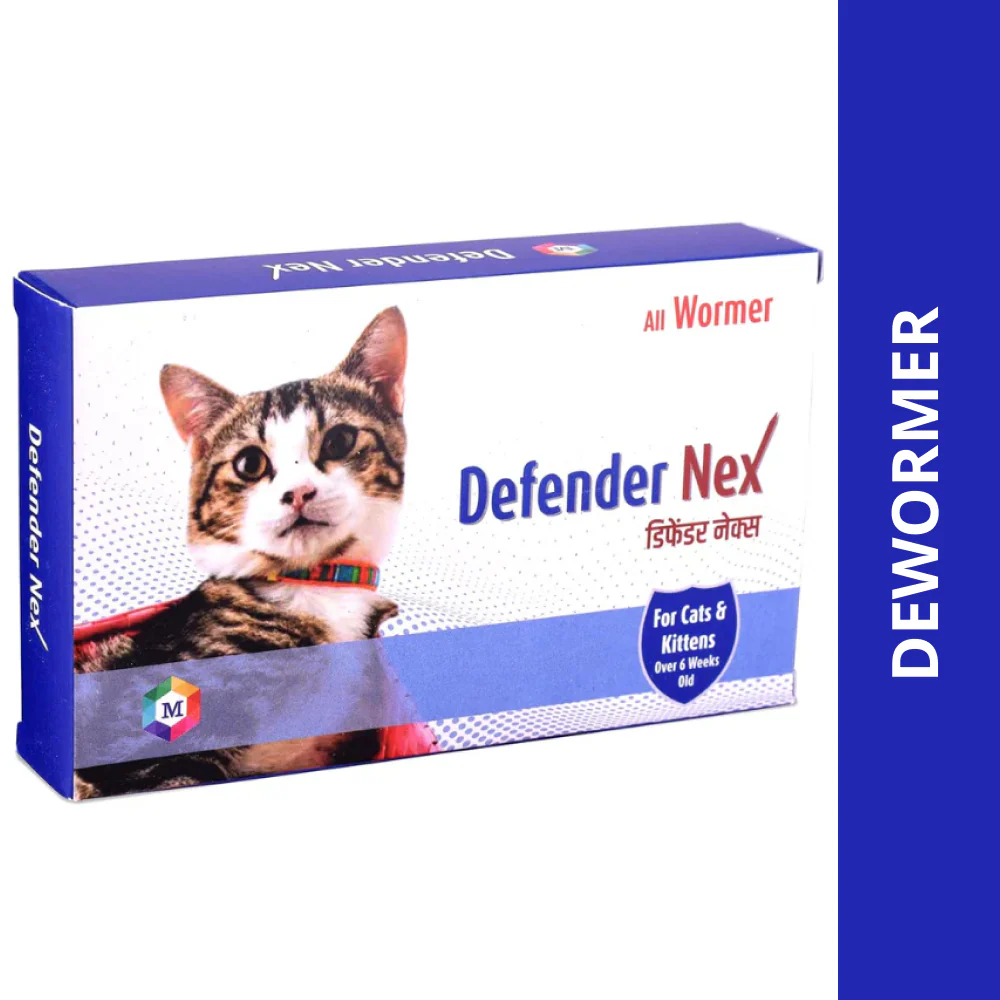

Description
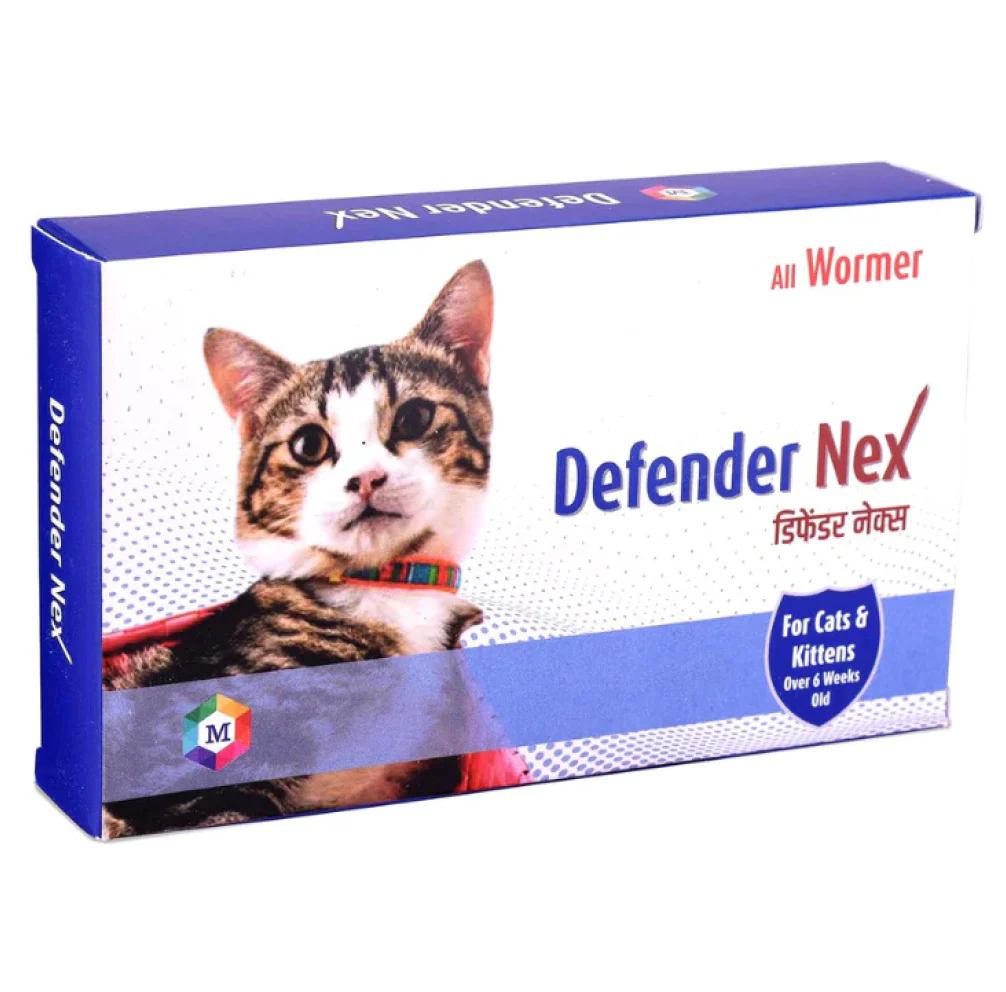
Medfly Healthcare Defender Nex Dewormer Tablets for Cats
Cats are experts at hiding discomfort — and worm infections are no exception. Whether you have an indoor Persian curled up on your sofa in Mumbai, a curious Indian Shorthair exploring every corner in Bengaluru, or a kitten you've recently brought home, intestinal worms are a far more common threat than most cat parents in India realise. Medfly Healthcare Defender Nex is a vet-approved, broad-spectrum deworming tablet formulated specifically for cats, using a dual-active combination of Praziquantel and Pyrantel Pamoate to target tapeworms, hookworms, and roundworms in a single, stress-free dose. No fasting needed, no complicated routine — just reliable protection every three months.
What Makes Defender Nex the Right Choice for Your Cat?
- A Formula Built for Feline Biology: Defender Nex isn't a dog dewormer reformulated for cats — it's designed from the ground up for feline physiology. Each tablet contains Praziquantel IP 20 mg and Pyrantel Pamoate IP 230 mg, a dosage ratio calibrated for cats, not dogs. Praziquantel disrupts the tapeworm's outer membrane, causing it to detach and be expelled. Pyrantel Pamoate paralyses roundworms and hookworms, allowing your cat's system to clear them naturally. Together, they cover the three worm types most commonly found in Indian cats (per veterinary consensus), with no overlap, no gaps.
- Scored Tablets for Precise Weight-Based Dosing: Every cat is different. That's why Defender Nex tablets are scored — marked to split cleanly into halves — so you can dose accurately by your cat's weight without guesswork. A petite kitten gets half a tablet; a larger adult cat gets one and a half. No mortar-and-pestle crushing, no messy liquids.
- No Fasting. No Fuss: You don't need to withhold food before or after giving Defender Nex. Simply place the tablet directly in your cat's mouth, or hide it in a small amount of wet food, a piece of chicken, or a treat. Most cats take it without resistance. The tablet's neutral profile means it doesn't trigger the food refusal that some stronger-smelling dewormers do.
Dosage & How to Give It?
By Body Weight
|
Cat Weight |
Dose |
|
Up to 2 kg |
½ tablet |
|
2.1–4 kg |
1 tablet |
|
Over 4 kg |
1½ tablets |
Give the tablet directly or disguise it in food. Do not withhold food before or after treatment.
How Often Should You Deworm Your Cat?
- For adult cats, deworm every three months as a standard schedule. Cats that hunt — even indoor cats in Indian homes who catch geckos, insects, or mice — are at higher risk of tapeworm infection and may need monthly treatment (per veterinary guidance). Outdoor cats in cities like Delhi, Chennai, or Kolkata, where exposure to other strays is possible, benefit from staying strictly on the quarterly schedule.
- Kittens: Treat at 6, 8, 10, and 12 weeks of age, then monthly until 6 months old, then every 3 months thereafter.
- Lactating cats: Should be treated at the same time as their kittens to prevent reinfection within the litter.
What Worms Does Defender Nex Treat?
- Tapeworms are the most common worm found in Indian cats, especially those who hunt or are exposed to fleas, which act as intermediate hosts. You may notice small rice-grain-shaped segments around your cat's rear or in their bedding. Praziquantel dissolves the tapeworm's protective outer layer, eliminating it quickly.
- Roundworms are easily transmitted through contaminated soil, infected prey, or from mother to kitten. Kittens with pot bellies, poor coat condition, or slow growth often have a roundworm burden. Pyrantel Pamoate paralyses and expels them efficiently.
- Hookworms are less visible but cause real damage — they attach to the intestinal lining and feed on blood, leading to anaemia, lethargy, and weight loss in cats. India's warm, humid climate, particularly during and after the monsoon, creates ideal conditions for hookworm transmission through contaminated soil.
Learn everything about cat deworming by reading our expert-approved blog: Cat Deworming 101: Say Goodbye to Worms With This Cat Deworming Guide
What Are The Signs Your Cat May Need Deworming?
Cats rarely show dramatic symptoms until the worm load is heavy. These are the quieter signs that your cat is due for deworming:
- Unexplained weight loss despite a normal appetite.
- A dull, patchy, or rough coat that isn't explained by grooming changes.
- Occasional vomiting or intermittent loose stools.
- Visible scooting or excessive licking around the tail base.
- Rice-like segments around the anus or in the litter box.
- Kittens with a rounded, distended belly and lower energy than expected.
If you're unsure whether your cat needs deworming or want to confirm a diagnosis before treating, consult a Supertails vet online — available same day, from anywhere in India.
Is Defender Nex Safe for Your Cat?
- For Kittens: Defender Nex is safe for kittens from 8 weeks of age and above 2 lbs (approximately 0.9 kg) body weight. Do not use for kittens younger than 2 months. For very young or underweight kittens, a vet consultation before deworming is always the safest choice.
- For Pregnant and Nursing Cats: Nursing cats should be treated at the same time as their kittens. For pregnant cats, consult your vet before administering any dewormer — timing matters, and your vet can advise on the safest window during gestation.
What Are Its Side Effects?
Defender Nex is well-tolerated by most cats. Mild, temporary digestive response — slight loose stools or reduced appetite for a few hours after dosing — is occasionally reported and resolves on its own. Serious adverse reactions are rare. If your cat vomits repeatedly or shows signs of unusual distress after dosing, stop treatment and contact a vet.
How Does Defender Nex Compare to Other Cat Dewormers on Supertails?
Cat dewormer tablets on Supertails vary by active ingredients, worm coverage, and approach (pharmaceutical vs natural). Here's an honest breakdown to help you choose.
|
Defender Nex (Medfly Healthcare) |
Skyworm Cat (Skyec) |
Endoban Cat (TTK Healthcare) |
|
|
Active Ingredients |
Praziquantel 20 mg + Pyrantel Pamoate 230 mg |
Praziquantel 20 mg + Pyrantel Embonate 230 mg |
Praziquantel + Pyrantel Pamoate |
|
Approach |
Pharmaceutical |
Pharmaceutical |
Pharmaceutical |
|
Treats Roundworms |
Yes |
Yes |
Yes |
|
Treats Hookworms |
Yes |
Yes |
Yes |
|
Treats Tapeworms |
Yes |
Yes |
Yes |
|
Supports Digestion & Gut Health |
No |
No |
No |
|
Chemical-Free Option |
No |
No |
No |
|
Tablet Scored for Weight Dosing |
Yes (halves) |
Yes (halves) |
Yes |
|
Safe for Kittens |
Not under 2 months / 2 lbs |
Yes (all ages) |
Check label |
|
Safe in Pregnancy |
Consult vet |
Consult vet |
Consult vet |
|
Indian Brand |
Yes (Pune) |
Yes (Chennai) |
Yes (Chennai/Bengaluru) |
|
Pack Format on Supertails |
Single / multiple tablets |
Pack of 4 tablets |
Tablets |
|
Best For |
Reliable, affordable pharmaceutical deworming for cats with confirmed worm burden |
Budget-friendly pharmaceutical deworming, same active ingredients as Defender Nex |
Broad-spectrum pharmaceutical deworming, Indian brand |
Vets Also Recommend…
-
Our complete collection of Cat Dewormers
-
Our collection of Cat Tick & Flea remedies
You can't always see what's going on inside your cat's gut — but you can stay ahead of it. Deworming your cat with Medfly Healthcare Defender Nex every three months takes less than a minute and costs less than a good bag of treats. It's the kind of small, consistent care that keeps your cat energetic, comfortable, and genuinely healthy for years to come. Order Defender Nex on Supertails today, and if you have any questions about your cat's deworming schedule, our vet team is ready to help.
(Disclaimer: Supertails' sole intention is to ensure that its consumers get information that is expert-reviewed, accurate, and trustworthy. However, the information contained herein should NOT be used as a substitute for the advice of a qualified physician. The information provided here is for informational purposes only. This may not cover everything about particular health conditions, lab tests, medicines, all possible side effects, drug interactions, warnings, alerts, etc. Please consult your doctor and discuss all your queries related to any disease or medicine. We intend to support, not replace, the doctor-patient relationship.)
FAQs
How do I give a deworming tablet to a cat who refuses medicine?
Hide the tablet in a small piece of chicken, tuna, or your cat's favourite wet food. Defender Nex has a neutral profile — no strong smell or taste that would alert a fussy eater. If your cat is particularly resistant, a pill popper (pill gun) available from Supertails makes direct oral administration much easier.
Can I give Defender Nex to my kitten?
Yes, Defender Nex is safe for kittens from 8 weeks of age weighing at least 0.9 kg. Give half a tablet for kittens up to 2 kg. Kittens should be dewormed at 6, 8, 10, and 12 weeks of age, then monthly until they reach 6 months old.
How often should I deworm my adult cat?
Every three months is the standard recommendation for adult cats. Hunting cats — even those who occasionally catch small prey indoors — should be dewormed monthly, as prey animals act as intermediate hosts for tapeworms (per veterinary consensus).
Do I need to fast my cat before giving Defender Nex?
No. One of Defender Nex's key advantages is that no pre- or post-treatment fasting is required. You can give it with a small amount of food, which also makes administration easier.
What worms does Defender Nex treat?
Defender Nex targets tapeworms, roundworms, and hookworms — the three most common intestinal parasites in Indian cats. Its dual-active formula (Praziquantel 20 mg + Pyrantel Pamoate 230 mg) covers all three in a single dose.
My cat is an indoor cat. Does she still need deworming?
Yes. Indoor cats can still pick up worms from contaminated surfaces, insects, or prey they catch at home. Tapeworm transmission through fleas is particularly common even in indoor environments. Quarterly deworming is recommended regardless of whether your cat goes outside.
Is Defender Nex safe for pregnant cats?
Consult your vet before deworming a pregnant cat. Lactating queens, however, should be treated alongside their kittens to prevent reinfection within the litter.
Can I use the same dewormer for my dog and cat?
No. Defender Nex is formulated specifically for cats and should not be given to dogs. Dog dewormers — including Medfly's own Defender Plus — contain Febantel, which is not safe for cats. Always use a species-specific product. For your dog, browse dog dewormers on Supertails.
My cat is a hunter. How often should I deworm her?
Monthly deworming is recommended for hunting cats, as rodents and birds act as intermediate hosts for tapeworms. If your cat catches prey even occasionally — lizards, insects, or mice — monthly treatment gives you the best protection against tapeworm reinfection.
After deworming, what should I look out for?
Most cats show no reaction at all. In rare cases, mild loose stools or brief appetite loss may occur for a few hours. You may also notice worm segments or worms in your cat's litter box within 24–48 hours — this is normal and confirms the treatment is working. If symptoms last beyond 24 hours, contact a vet.